
Nurses are the backbone of patient care. They spend more time with patients than any other clinical role and are deeply embedded in nearly every aspect of the care delivery process. Yet, despite their central role, nurses face persistent communication challenges that hinder efficiency, delay care, and contribute to burnout.
TigerConnect, in collaboration with Becker’s Healthcare, surveyed 105 clinical leaders—including 53 nurses and nurse executives—to uncover the most pressing communication issues in healthcare organizations. The findings reveal three key challenges that stand out for nurses:
Top 3 Nurse Communication Challenges
- Cross-Department Communication Barriers (64%)
Nurses often struggle to communicate outside their unit, especially when workflows span multiple departments. This slows down coordination and creates friction in care delivery.
- Too Many Disconnected Systems (60%)
Nurses are forced to navigate multiple platforms—EHRs, scheduling tools, pagers, answering services—just to reach the right provider. This fragmentation wastes time and increases stress.
- Lack of Interoperability (51%)
Systems that don’t talk to each other compound the problem. When departments use different tools, nurses must manually bridge the gaps, often while managing critical patient needs.
These challenges are deeply interconnected. A lack of interoperability leads to system overload, and both issues make cross-department communication even harder. The result? Delays in care, missed connections, and increased frustration for nurses and providers alike.

Want to See How Your Organization Compares?
ownload the full TigerConnect-Becker’s survey report to explore how communication impacts clinical workflows—and how nurses can lead the way in solving it.
The Real-World Impact
Consider a common scenario: A nurse needs to update a provider about a new patient. They must first check the EHR or ED system for prior care notes, then locate the on-call provider’s contact info, determine their preferred communication method, and hope the schedule is accurate. If the provider doesn’t respond, the nurse has to repeat the process—often while juggling other urgent tasks.
This complexity doesn’t just slow down workflows—it directly affects patient outcomes. Delays in communication can lead to delayed diagnoses, slower treatment, and increased risk for patients. For nurses, it means more stress, more burnout, and less time for direct patient care.
A Better Way: Unified Clinical Communication
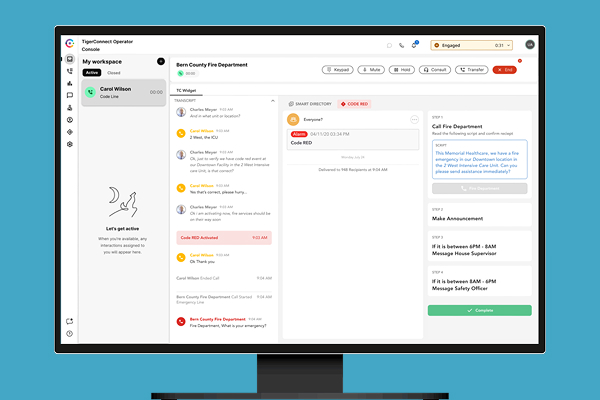
TigerConnect offers a modern solution: a cloud-native Clinical Communication & Collaboration (CC&C) platform that consolidates communication into a single, secure app. It integrates with EHRs, on-call schedules, and monitoring systems, enabling real-time messaging, voice, and video calls.
With TigerConnect:
- Nurses save up to 137 minutes per day
- Role-based messaging eliminates the need to search for contacts
- Integrated workflows accelerate care coordination
- Secure communication keeps patients informed and engaged
Why It Matters for Healthcare Leaders
Improving nurse communication isn’t just a tech upgrade—it’s a strategic imperative. Hospitals and health systems that streamline communication:
- Reduce delays in care
- Improve staff satisfaction and retention
- Enhance patient outcomes
- Increase operational efficiency
In a time when nurse shortages and burnout are at critical levels, investing in a CC&C platform like TigerConnect is a proactive step toward sustainable, high-quality care.
Discover how TigerConnect can transform clinical communication—schedule your personalized demo today.
Featured Resources


Related Articles