
Emergency medical services sit at one of the most critical intersections in healthcare where urgency, clinical judgment, and coordination converge. EMTs and paramedics operate in dynamic, high-stakes environments, making rapid decisions that shape patient outcomes long before a hospital encounter begins.
As healthcare systems work to improve outcomes across the continuum of care, one reality is increasingly clear: pre-hospital communication is no longer just an operational necessity, it is a clinical and strategic imperative.
The Pre-Hospital Communication Gap
Pre-hospital care depends on timely, reliable information exchange between EMS teams and receiving facilities. Yet many organizations still rely on radio communication methods that were never designed for today’s complexity, scale, or acuity.
In a recent conversation with Cody Nason, BS, NRP, Emergency Medical Services Coordinator at Elliot Health System, and Chris Wood, Senior Implementation Product Specialist, Pre-Hospital & Transfer at TigerConnect, we discussed the real-world implications of these gaps.
As a regional trauma center, Elliot Health System coordinates across multiple EMS agencies while managing high patient volumes and acuity. Historically, radio-based communication—while familiar—introduced frequent friction: blind patches, missed transmissions, and limited situational awareness.
“When crews can’t get through on the radio, they sometimes just arrive without notice,” Cody shared. “That limits our ability to plan, assign resources, and move patients efficiently through the emergency department.”
While frontline clinicians adapt and patient care continues, the cumulative impact is meaningful—on throughput, staff workload, and overall care experience.
Why Modernization Must Begin Before Arrival
Improving emergency care outcomes does not start at the hospital doors—it starts in the field.
Elliot Health System began implementing TigerConnect’s Pre-Hospital application in late 2025, taking a hybrid approach while maintaining radio workflows for select high-acuity scenarios. What followed was rapid adoption and meaningful operational improvement.
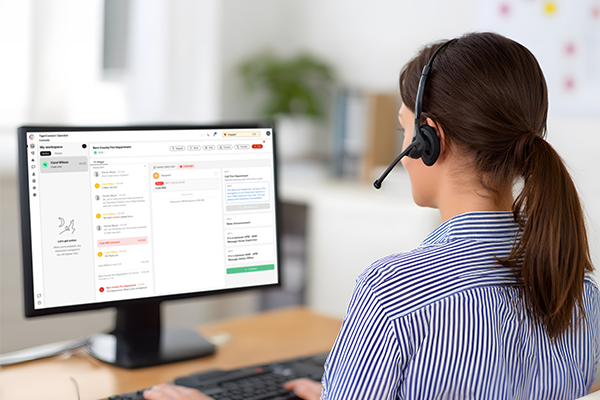
Through secure, mobile-first communication, EMS teams now provide early notification and real-time status updates—context on patient condition, details on patient assessment, real-time updates on vitals, live GPS-driven arrival ETAs— giving emergency department teams visibility well before patient arrival. This enables:
- Proactive room and resource planning
- Reduced wall time at peak times
- Clearer handoffs with less redundant communication
Over 750 EMS cases were coordinated through TigerConnect in a recent 30-day period, helping the emergency department maintain flow even during sustained demand.
“The most important outcome for us is getting patients into rooms faster,” Cody noted. “That tells us the system is aligned—EMS, nursing, and operations are all working from the same information.”
Notably, much of this transformation is invisible to patients. The technology operates quietly in the background, improving privacy, dignity, and efficiency without adding burden—or friction—to the clinician experience.
EMS Throughput Is a Community Issue
Modernizing pre-hospital communication also produces benefits that extend beyond hospital operations.
EMS agencies, like hospitals, face ongoing staffing constraints. When crews are delayed offloading patients, the impact is felt across the community—reducing ambulance availability and increasing response times for the next emergency.
“Reducing EMS wall time isn’t just a hospital efficiency issue,” Cody explained. “It’s a community health issue. Every minute we save helps get crews back in service faster.”
“Legacy radio workflows have served EMS for decades, but they weren’t built for the complexity and speed of today’s emergency care,” said Chris Wood. “Moving to a modern, secure, mobile-first communication solution removes friction, improves reliability, and helps hospitals and agencies coordinate in real time—so those gains compound across a region and ultimately improve care delivery.”
A More Connected Model for Emergency Care
At its core, modernizing EMS communication is about alignment—between people, systems, and moments that matter.
When EMS teams can easily reach the right clinicians, share accurate information, and trust that messages will be received and acknowledged, they can focus fully on clinical care. When hospitals have visibility before arrival, they can respond faster and more confidently.
This is how outcomes improve—together.
- Cody Nason, BS, NRP, Emergency Medical Services Coordinator, Elliot Health System
- Chris Wood, Senior Implementation Product Specialist, Pre-Hospital & Transfer, TigerConnect
Featured Resources



Related Articles