
5 Ways to Reduce Hospital Alarm Fatigue on Your Units
Hospital alarm fatigue puts patients and clinicians at risk. Explore five practical ways care teams can cut alarm noise and respond faster.
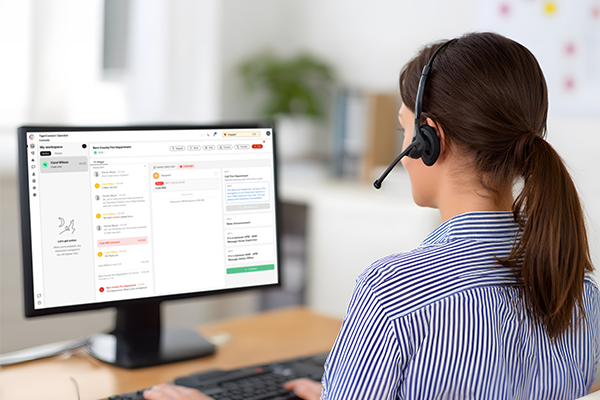
Your hospital contact center is more than a call routing system, it’s a critical link in the patient safety chain. When a hospital invests in a modern operator console, it is not just reducing IT complexity — it is closing a gap in the care coordination chain that has direct implications on patient safety.
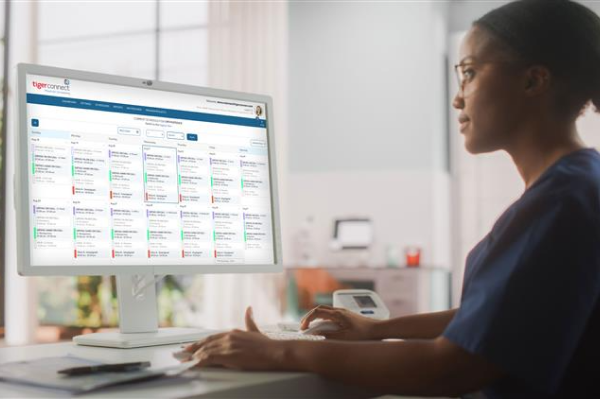
Around half of U.S. physicians report burnout, driven by administrative overload, uneven call burden, and little control over their own schedules. Discover the five capabilities health systems should look for in modern physician scheduling software — intelligent automation, a centralized source of truth, integrated clinical communication, workload and fatigue reporting, and mobile real-time schedule management — and how each addresses a root cause of burnout while improving access, coverage, and operational efficiency at enterprise scale.
Hospital operators are the connective tissue of clinical communication. Yet the software they rely on was built for a different era. Discover how a modern operator console can transform the hospital contact center — improving call handling, emergency response, and operator efficiency through cloud-native design and integrated workflows.
AI is reshaping physician scheduling software by helping health systems reduce administrative burden, improve care coordination, and operate more efficiently. This blog explores how AI agents can streamline schedule creation, resolve coverage gaps, support shift swaps, and deliver real-time on-call access without added work for schedulers or operators.
Healthcare communication orchestration is emerging as a strategic digital pillar for health systems, helping care teams move beyond fragmented alerts, manual coordination, and disconnected workflows. This wrap-up explores how orchestrated communication can reduce cognitive burden, improve throughput, strengthen care team efficiency, and unlock measurable ROI while supporting better experiences for patients and the clinicians who care for them.
Legacy radio workflows can’t keep up with today’s emergency care demands. Discover how modern, secure, mobile-first communication helps EMS and hospitals coordinate in real time—speeding room placement, reducing wall time, and improving patient flow.
AI-enabled healthcare communication orchestration can do more than automate tasks—it can activate teams earlier, reduce alter fatigue, and move work through the system faster. Discover how health systems can differentiate themselves by embedding AI into real-world workflows via a System of Activation that engages the right people at the right time with actionable info and feedback loops.
For years, the hospital switchboard has been treated as a utility—high‑volume, always‑on, and chronically strained, but rarely viewed as a strategic asset. Today, we know that AI can transform this overlooked tool into something far more powerful: an intelligent, anticipatory layer of the hospital’s operating model.
Healthcare communication shouldn’t be a collection of disconnected tools—it should be a strategic investment pillar. When elevated to this level, it becomes a powerful driver of both clinical and financial performance.
End of content
End of content
Ⓒ2026 TigerConnect. All Rights Reserved.