Hospital operators are the connective tissue of clinical communication. They route time-sensitive calls, activate emergency response teams, and serve as the first point of contact for patients, families, and care teams around the clock. Yet the operator console software most hospitals rely on today was built for a different era — and the gap between what these systems can do and what modern care coordination demands is widening.
The Old Hospital Operator Console Hasn’t Kept Up
Most hospital operator consoles in use today are on-premise, hardware-dependent, and siloed from the EHR. That means every call requires toggling between multiple systems, cross-referencing paper schedules, and manually piecing together the information needed to route a call correctly.
The consequences aren’t just inefficiency. A 2025 systematic review published in the Annals of Internal Medicine — covering 46 studies and more than 67,000 patients — found that poor communication contributed to 24% of patient safety incidents and was the sole identified cause in more than 10% of cases. In the U.S. specifically, communication failures contribute to over 60% of all hospital-based adverse events. The operator console sits directly in the path of those breakdowns. When a call comes in for an on-call cardiologist at 2 a.m., and the operator is hunting across three systems to find the right provider, every second matters.
It’s also a staffing problem. Operators are managing complex call volumes with outdated tools, under constant pressure to respond instantly to emergencies they may not be fully equipped to handle. That combination drives burnout and turnover at a time when healthcare organizations can least afford it.
What a Smart Operator Console Actually Does
A modern operator console isn’t just a prettier version of what you already have. It’s a fundamentally different approach to how hospitals route calls, activate emergency responses, and connect patients with care. Here’s what that looks like:
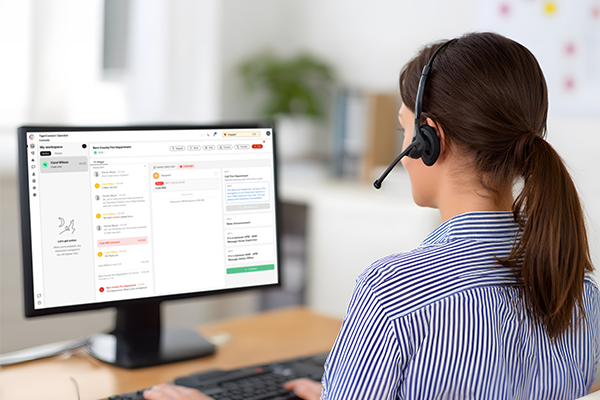
- One screen, everything you need. Rather than toggling between a telephony system, an EHR, a scheduling tool, and a messaging platform, operators work from a single unified interface. Patient information, provider schedules, and communication tools are all accessible without switching context.
- AI-assisted call handling. AI is reshaping hospital operator systems. Context-aware, next-best-action recommendations give operators real-time guidance during high-pressure situations, reducing errors and cognitive load. The result is an estimated 25% reduction in call handling times and a 30% improvement in first-call resolutions.
- One-click code activation. Emergency response workflows are scripted and standardized. When a code is called, the operator launches a pre-configured workflow with a single click — the right people are notified, the right escalation paths are triggered, and nothing falls through the cracks.
- Cloud-native flexibility. Moving away from on-premise software eliminates hardware maintenance contracts, reduces IT burden, and enables operators to work remotely. That last point matters: remote operator capability expands your talent pool and provides continuity during staffing disruptions.
- Integration across systems you already use. Real-time connection to your EHR, on-call scheduling platforms, and communication systems means operators get accurate information without manual cross-referencing.
The Financial Case for Operator Console Software Migration
Hospital IT and operations leaders often treat the switchboard as a low-priority infrastructure project, something to get to eventually. It’s worth reframing that.
The average cost of an inpatient day in the U.S. exceeds $3,200. When communication failures contribute to extended stays, readmissions, or adverse events, that cost compounds fast. And hospitals with strong patient experience scores see up to 2.6x higher profitability than peers. The operator console is a patient experience touchpoint that most organizations aren’t fully accounting for.
Think about what an inefficient console costs in aggregate:
- Misdirected or dropped calls during critical moments
- Delayed emergency responses due to manual, multi-system lookups
- Operator overtime and turnover from preventable burnout
- Ongoing maintenance contracts on aging, on-premise hardware
- IT resources tied up supporting infrastructure that no longer serves the organization
A modern operator console delivers a 40% reduction in operator workload alongside meaningfully faster response times across the board. That’s not just operational efficiency — it’s a foundation for better care coordination at every level of the organization.
Futureproofing Your Operator Console Software: Why Now
Staffing pressures, financial headwinds, and rising patient expectations are forcing hospitals to get more out of every dollar and every staff member. The legacy switchboard is a drag on all three fronts.
Modernizing your operator console isn’t a luxury upgrade. It’s a necessary step in building communication infrastructure that can actually support the way hospitals operate today. Cloud-native architecture, AI-assisted workflows, and true system integration aren’t future features. They’re available now, and hospitals that adopt them are seeing real operational gains.
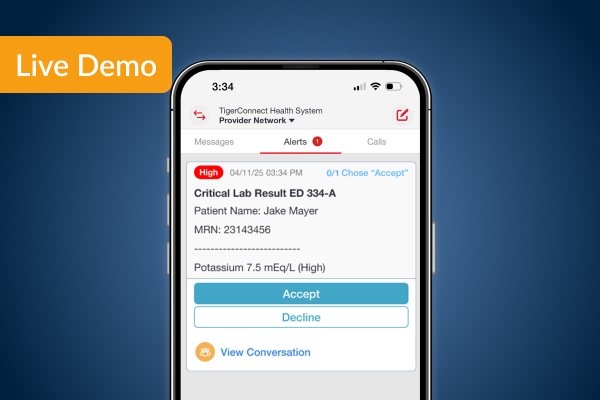
If you’re curious what this looks like in practice, watch our 15-minute on-demand product showcase. It’s the fastest way to see TigerConnect Operator Console in action.
Featured Resources
No posts

Related Articles