When clinicians and informaticists talk about patient safety, the conversation usually centers on EHR design, medication protocols, or clinical decision support. Rarely does it start with the hospital contact center. But it should. The contact center is where care coordination begins for most patients, families, and care teams, and the operator console software sitting at its core determines how well it performs when it matters most.
The Legacy Hospital Contact Center is a Clinical Infrastructure Problem
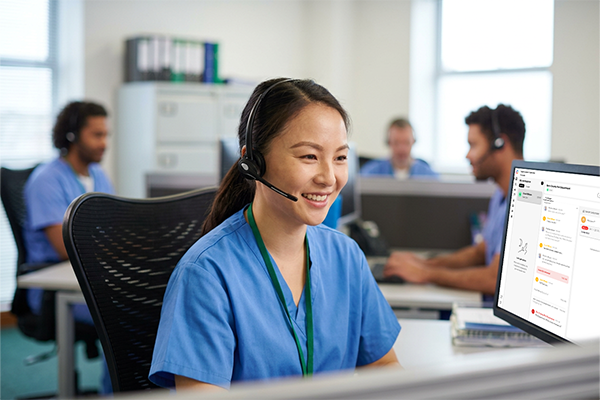
Most hospital contact centers today run on legacy operator console software that was never designed to support the pace or complexity of modern care delivery. Operators navigate disconnected systems, manually cross-reference on-call schedules, and route calls without real-time access to the patient or provider data they need.
The clinical consequences of that friction are well documented. The Joint Commission has estimated that miscommunication between health professionals during transfers of care contributes to 80% of serious medical errors. Those failures don’t happen in a vacuum — they happen at the exact moments when the contact center is the connective link between a patient, a care team, and the next step in treatment. When the operator console software powering that contact center can’t surface the right information quickly, the risk of a breakdown compounds.
It’s also a staffing problem. Operators are managing complex call volumes with outdated tools, under constant pressure to respond instantly to emergencies they may not be fully equipped to handle. That combination drives burnout and turnover at a time when healthcare organizations can least afford it.
What Clinicians Actually Need from a Hospital Contact Center
From a clinical informatics standpoint, the hospital contact center needs to function as an integrated node in the care coordination network, not a standalone call routing system. The operator console is the interface where that integration either works or it doesn’t. That means:
- Real-time access to accurate data. Operators need live visibility into on-call schedules, patient location, and provider availability. When that information lives in a separate system or requires a manual lookup, response times suffer, and errors happen.
- Standardized emergency workflows. Code activations and critical escalations should follow scripted, consistent protocols every time. Variability in how emergencies are handled is a patient safety risk, and outdated operator console software introduces that variability by design.
- Closed-loop communication. Every call, transfer, and escalation should be trackable. Without that audit trail, there is no way to identify where breakdowns are occurring or measure response time performance against clinical benchmarks.
- Reduced cognitive burden on operators. Clinical informaticists spend considerable energy reducing alert fatigue and cognitive overload for bedside clinicians. The same principle applies to contact center staff. A hospital contact center that forces operators to juggle multiple screens and systems under time pressure is one that will produce errors.
Why This Is a CMIO Conversation, Not Just an IT One
Hospital contact center modernization is frequently framed as an IT infrastructure project. That framing undersells the clinical stakes and leads organizations to deprioritize it.
When a hospital invests in a modern operator console, one that is cloud-native, integrated with the EHR and scheduling systems, and equipped with AI-assisted workflows, it is not just reducing IT complexity. It is closing a gap in the care coordination chain that has direct implications for patient outcomes. The hospital contact center touches every department, every care team, and every patient interaction. Treating it as a back-office function means accepting preventable risk.
For health system leaders evaluating their clinical communication infrastructure, the hospital contact center deserves the same scrutiny as any other patient-facing system. The data on communication failures is clear. The technology to address them exists. The question is whether organizations are willing to prioritize it.
Building a Better Hospital Contact Center
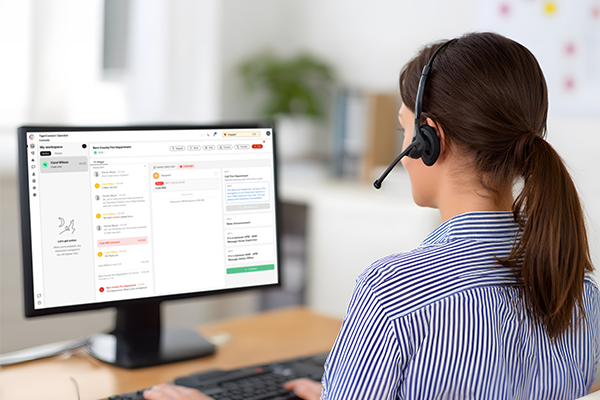
Healthcare is moving toward a model where communication infrastructure needs to be as dynamic and integrated as the care it supports. That means cloud-native platforms, AI-assisted decision support, and seamless connectivity across EHR, scheduling, and messaging systems, all surfaced through a single operator console interface.
For CMIOs and clinical leaders evaluating where communication gaps are putting patients at risk, the hospital contact center is a logical and high-impact place to start.
To see what a modernized operator console looks like in practice, watch our 15-minute on-demand product showcase. It covers how TigerConnect is helping health systems close the gap between legacy contact center infrastructure and the demands of modern care delivery.
Featured Resources


Related Articles