Case Study

UMMS Accelerates Patient Transfers with HIPAA-Compliant, Real-Time Communication
Discover how TigerConnect helped the University of Maryland Medical System (UMMS) replace faxes and phone tag with an EHR-integrated transfer workflow.
Streamlining Patient Transfers With A CC&C Platform
Timely and efficient patient transfers are key to achieving the best possible outcomes and ensuring patients receive the right level of care at the right time. Transfer center workflows can be cumbersome and inefficient when care teams rely on antiquated communication methods like faxes and pagers. Read the case study to learn how automated transfer workflows and asynchronous communication with TigerConnect allowed UMMS to provide the best possible care for a patient with a time-sensitive emergency.
“The dedication and teamwork shown in the care of this patient, enabled by collaborative technology workflows, was simply outstanding. I have no doubt that our team gave this patient with a time-sensitive emergency the best chance we could for a good outcome.”
– Mark Sutherland, MD, Medical Director, University of Maryland Medical System.

University of Maryland Medical System Case Study
Discover how UMMS facilitates inter-hospital ED transfers by automating workflows with the TigerConnect Clinical Collaboration Platform.
Overview
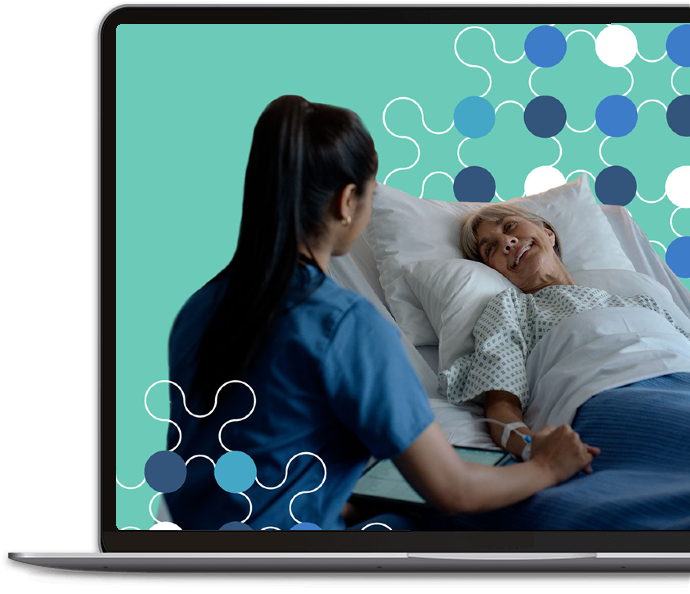
The University of Maryland Medical System (UMMS) provides primary and specialty care at more than 150 locations across the state, including academic, community, and specialty hospitals that together provide 25% of all hospital-based care in Maryland. With over 33,000 transfer requests per year expected to increase to upwards of 76,000, UMMS needed a modern communication platform to replace the outdated and inefficient use of fax machines and frustrating phone tag.
The Challenge
Transferring a patient between hospitals is one of the most time-sensitive handoffs in healthcare, and UMMS was still relying on fax machines and phone tag to manage it. Each transfer meant tracking down the right provider, waiting on callbacks, and pulling clinicians away from other patients, all while transfer volume kept climbing.
The challenge went beyond improving response times. Rolling out technology across a system of academic, community, and specialty hospitals means accounting for different needs and disparities at each site. UMMS needed a HIPAA-compliant, system-wide platform that could connect care teams miles apart in real time, integrate with the EHR, and make it easy to reach the right specialist without knowing their name or schedule.
“We use TigerConnect to ensure that we are in constant touch with our hospitals throughout the system.
— Mark Sutherland, MD, Medical Director, University of Maryland Access Center

The Solution
TigerConnect integrated with UMMS’s EHR to create a custom automated workflow called Order-Initiated Transfer Requests. When a physician submits a transfer order in the EHR, a priority TigerConnect message is automatically sent to the University of Maryland Access Center.
From there, the ordering physician communicates in real time with the Access Center Physician On Duty. Using Roles, staff can message the right provider by clinical role, such as “Neurologist On Call,” without knowing a name or schedule. Specialists and transfer coordinators join the same group message, and patient information is shared securely.
The Results
When a 54-year-old truck driver arrived with sudden vision loss from a suspected central retinal artery occlusion (CRAO), the team coordinated entirely in one TigerConnect group message. They chose helicopter transport to stay within the 4.5-hour tPA window, and flew the patient 75 miles to Baltimore. The ophthalmologist evaluated him within 5 minutes of landing, and he received tPA and hyperbaric therapy, with 3 hours 22 minutes from onset to treatment.
The workflow also gave back time to providers by eliminating phone calls, wait times, and interruptions. One month after launch, 68% of surveyed ED Directors and Physicians agreed or strongly agreed they preferred the TigerConnect workflow. UMMS plans to keep optimizing it to improve patient safety and provider satisfaction.
“The dedication and teamwork shown in the care of this patient, enabled by collaborative technology workflows, was simply outstanding. I have no doubt that our team gave this patient with a time-sensitive emergency the best chance we could for a good outcome.””
— Mark Sutherland, MD, Medical Director, University of Maryland Access Center