Case Study

How St. Charles Health System is Optimizing EMS-to-ED Collaboration with TigerConnect Pre-Hospital
Results at a glance
- 10 of 24 EMS agencies onboarded within two weeks of go-live
- EKGs now transmitted to the ED in real time, enabling earlier cath lab activation
- Standardized EMS-to-ED communication deployed across all four St. Charles hospitals
- Triage-level color coding gives charge nurses advance visibility to manage patient flow
The Initiative: 24 Agencies, One Unreliable Radio
St. Charles Bend is the largest EMS receiving facility in Central Oregon. With roughly 170 ED patients a day and close to 12,000 EMS transports a year, the emergency department operates at a pace and volume that demands precise, reliable coordination between field crews and hospital staff.
For years, that coordination ran through a Hospital Emergency Ambulance Radio (“HEAR”) and phone calls. Neither was built for it.
The challenges were compounded by the sheer number of agencies involved. Unlike larger metro areas served by one or two transport companies, St. Charles receives patients from 24 different community and city-based fire rescue teams, each with its own workflows and communication habits. Standardization was nearly impossible.
Buller had seen the consequences firsthand. In one case, the ED activated a full team for what they heard as a 50-year-old patient over the radio. The patient who arrived was 15. “We were expecting this adult man to come in, and it ended up being a child,” said Buller. “That miscommunication changes how we prepare for an incoming patient.”
The hospital didn’t need data to justify the change. They had real cases where communication over the HEAR Radio was ineffective. The question wasn’t whether to modernize. It was how.
“Because of the call volume and the frequency, there could be three different calls going to three different hospitals, and they can overtalk each other. It’s hard to know what’s actually coming to you.”
— Jeremy Buller, BA, RN, TCRN, Trauma Program Coordinator at St. Charles Bend.
The Strategy: Simple Enough for the Back of an Ambulance
St. Charles implemented TigerConnect Pre-Hospital across all four of its hospitals, replacing radio-based communication with a platform purpose-built for real-time EMS-to-ED collaboration.
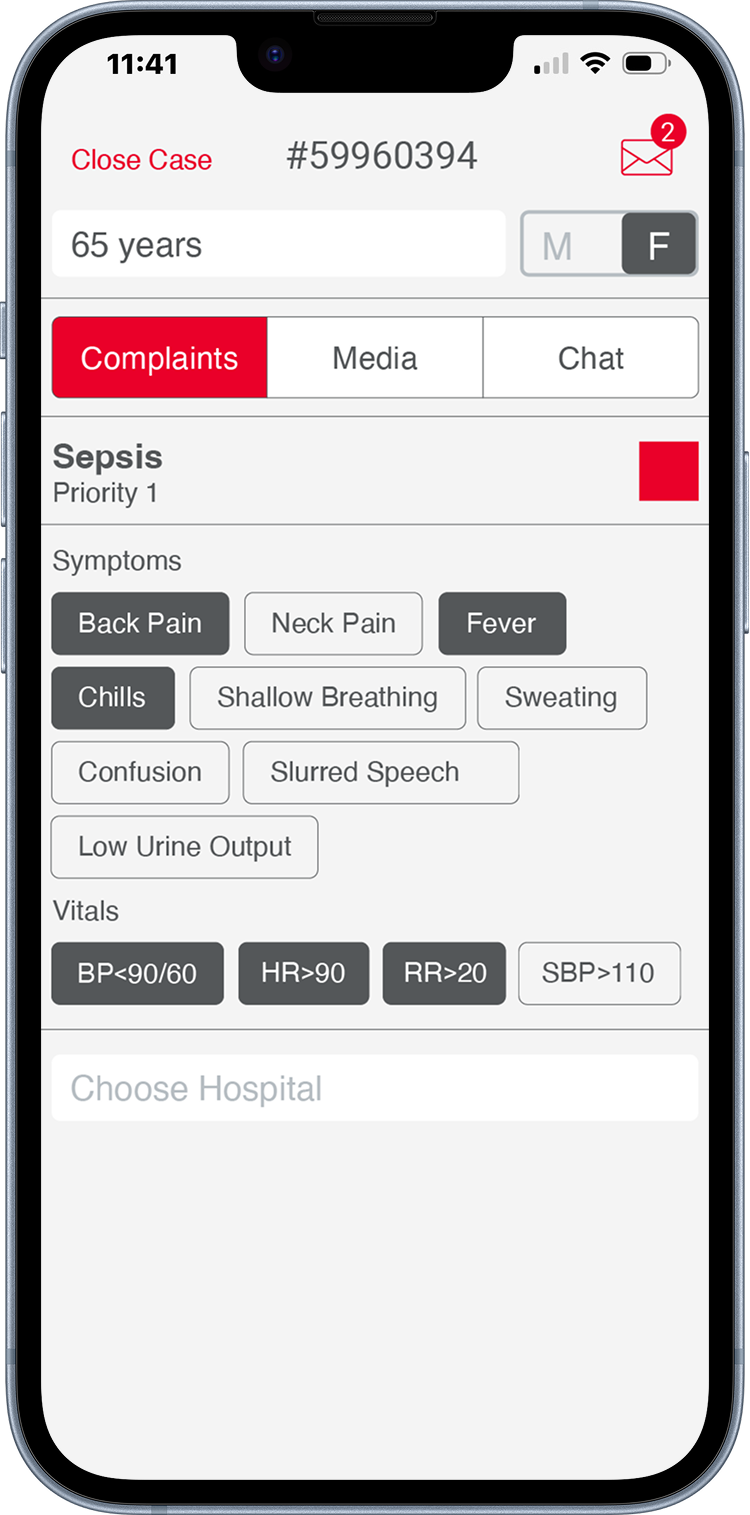
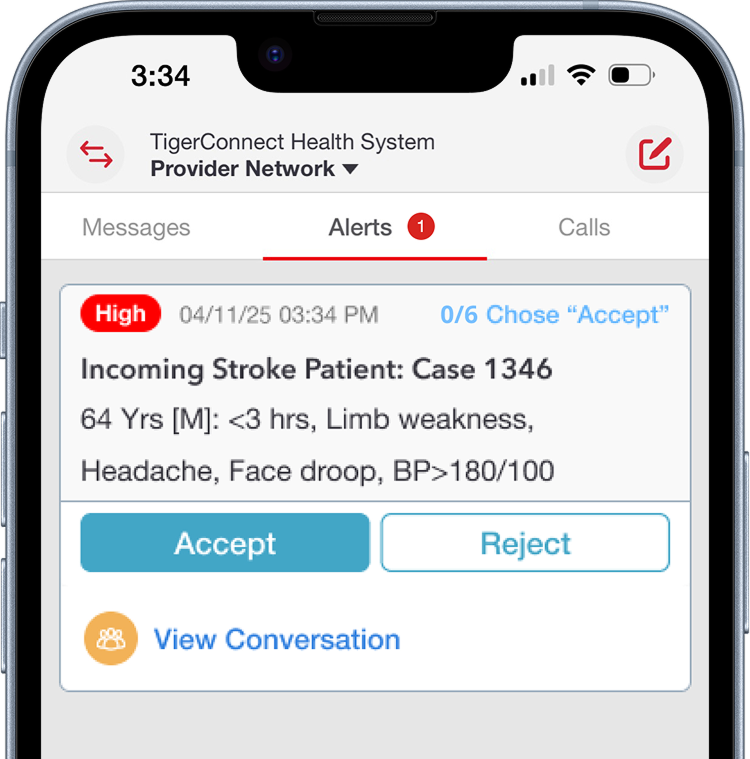
TigerConnect Pre-Hospital is designed for the reality of emergency field work. EMS crews can send comprehensive patient information from any device in under 30 seconds using configurable buttons that require no typing. Voice memos, trauma scene photos, videos, and real-time EKGs can all be sent in real time, giving the ED a clear, HIPAA-compliant picture of what is coming before the ambulance arrives. GPS-tracked ETAs let charge nurses monitor incoming transports from a live dashboard and begin preparing resources accordingly.
For Buller, one of the platform’s greatest strengths is its simplicity. Onboarding a new agency doesn’t require lengthy training cycles or complex IT work.
“I just sent a new agency a video of how to use TigerConnect Pre-Hospital, and that was it,” said Buller. “It’s that simple. Watch the video, have the app on your phone. You’re done.”
That simplicity extends to the customization layer. When Buller noticed a gap in the charting options for cardiac patients, he messaged his TigerConnect implementation lead directly. It was resolved in minutes.
“I messaged the team that I noticed under the ‘Urgent’ tab, there’s no place to add interventions,” said Buller. “Within four minutes, it was there. Just to have that type of response from the TigerConnect team was super helpful.”
The Impact: Clearer Communication, Faster Decisions
Two weeks after go-live, the results are already reshaping how St. Charles coordinates emergency care.
The most significant early win has been the ability to transmit real-time EKGs prior to patient arrival. Previously, EMS crews would describe what they were seeing on the EKG over the radio, but the ED had no way to verify it. No team was activated until a physician physically saw the EKG in person. TigerConnect Pre-Hospital now allows EMS to transmit EKGs directly to the ED in real time, enabling the hospital to begin mobilizing its cath lab team before the patient arrives.
The platform is also changing how charge nurses manage patient flow. TigerConnect Pre-Hospital’s triage-level color coding gives nurses a real-time view of incoming transports categorized by severity: green patients can be directed to the waiting room, yellow patients need a bed and a nurse, and red patients need a room and a full team. That advance visibility allows charge nurses to allocate resources and assign rooms before arrival, reducing the time patients spend waiting to be placed.
“Our interventionalist said all he needs is the EKG and the patient’s name to make the call. That means we can activate the cath lab team before the patient even arrives. If the patient is still 10 minutes out, the team can use that time to mobilize and prepare, so we’re ready to get the patient on the table almost immediately when they get here.”
— Jeremy Buller, BA, RN, TCRN, Trauma Program Coordinator at St. Charles Bend.
Voice memos have emerged as an unexpected standout. In one early case, a paramedic was managing a critical patient in the back of the ambulance with both hands occupied. He opened a case, skipped every field, went straight to voice memo, and sent a clear, real-time update to the ED with lights and sirens audible in the background.
Across the board, the feedback from both EMS partners and hospital staff has been overwhelmingly positive. Ten of the highest-volume agencies were onboarded within the first two weeks, and additional agencies are actively requesting access.
What’s Next
St. Charles is already looking at how to deepen its use of TigerConnect Pre-Hospital. The near-term priority is onboarding the remaining agencies that transport to any of its four hospitals, creating a fully standardized process across the region. Longer term, Buller sees an opportunity to leverage the platform’s team activation and on-call scheduling capabilities to further accelerate time-sensitive workflows like STEMI response, routing EKGs directly to the interventionalist on-call who will make the cath lab decision rather than waiting for an ED physician to relay the information.