Case Study

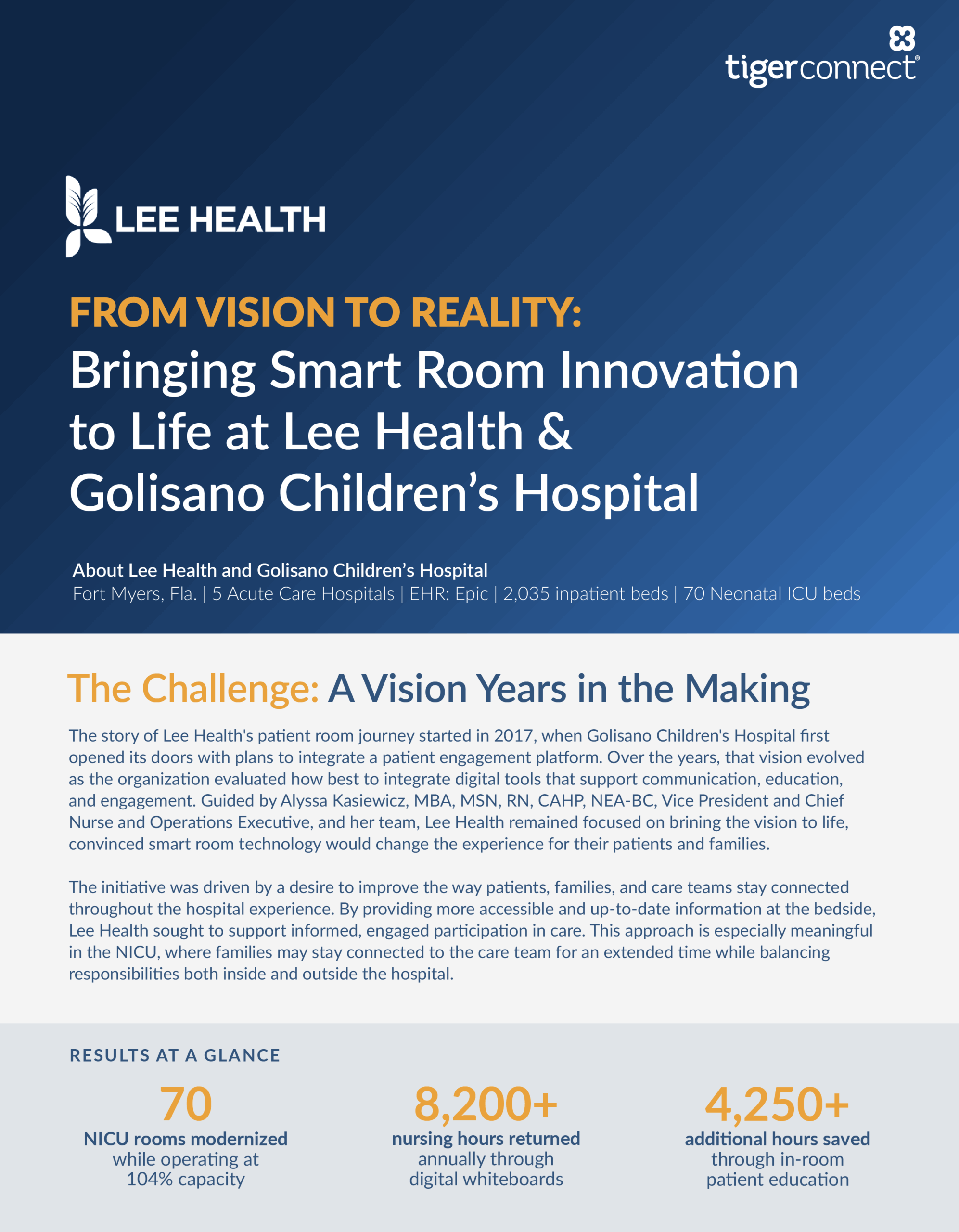
Bringing Smart Room Innovation to Life at Lee Health & Golisano Children’s Hospital
The Challenge: A Vision Years in the Making
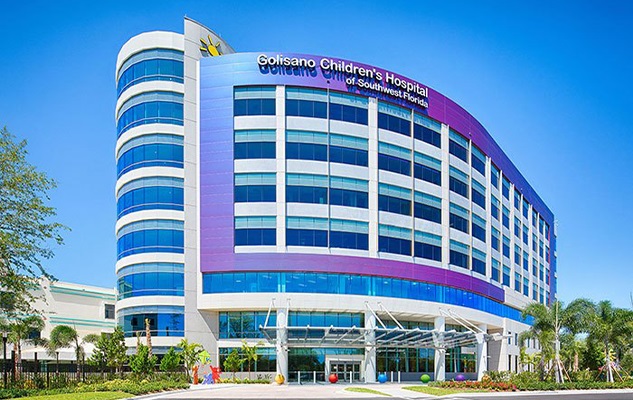
The story of Lee Health’s patient room journey started in 2017, when Golisano Children’s Hospital first opened its doors with plans to integrate a patient engagement platform. Over the years, that vision evolved as the organization evaluated how best to integrate digital tools that support communication, education, and engagement. Guided by Alyssa Kasiewicz, MBA, MSN, RN, CAHP, NEA-BC, Vice President and Chief Nurse and Operations Executive, and her team, Lee Health remained focused on bringing the vision to life, convinced smart room technology would change the experience for their patients and families.
Results at a glance
NICU rooms modernized while operating at 104% capacity
nursing hours returned annually through digital whiteboards
additional hours saved through in-room patient education
The Vision: Seamless, Reliable Technology
A key element of the initiative was the active involvement of frontline nurses throughout the design process. Lee Health involved nurses from all departments, from day one, allowing them to help shape the solution rather than simply adopt it.
The result was a solution built for the real complexity of a pediatric setting: parents as the primary end users, the distinct needs of neonates versus adolescents, light and sound sensitivity in the NICU, and multilingual families across a diverse Southwest Florida population. Getting that right took real commitment, and the Golisano team brought it.
“We allowed them to dream,” said Kim Gault, Senior Application Analyst, Lee Health. “Their feedback helped inform decisions about how the solution would be configured and integrated into the care environment.”
The Solution: TigerConnect Smart Room
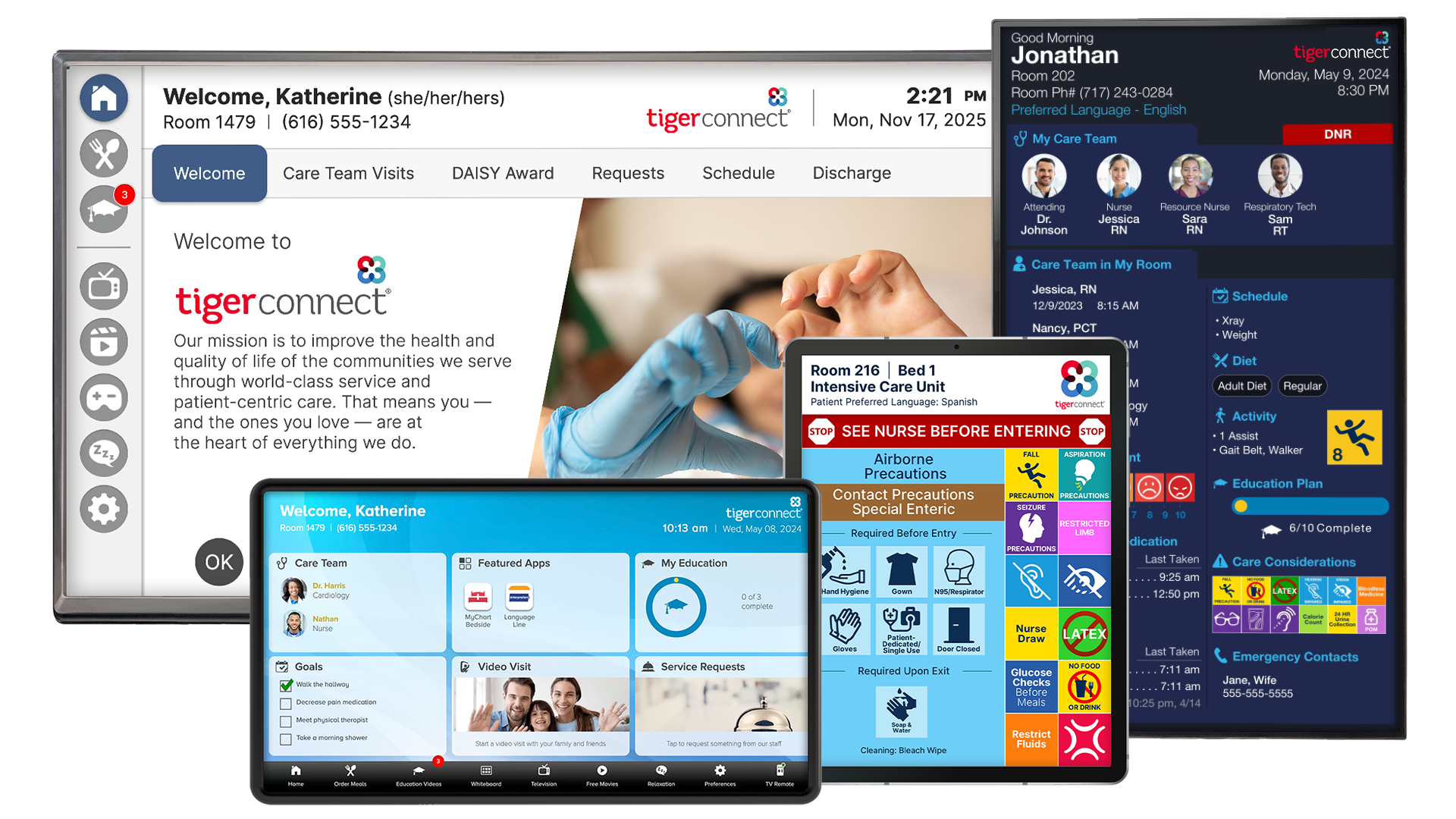
TigerConnect Smart Room integrates directly with Epic and existing workflows, placing real-time care information where it matters most: in the room. Deployed across 70 NICU beds, 36 medical-surgical beds, 16 pediatric ICU beds, and 13 hematology-oncology beds simultaneously, it includes EHR-integrated digital whiteboards that update automatically as nurses document, interactive in-room TVs with entertainment, ambient content, multilingual support, and telehealth integration enabling remote physicians to join the bedside in real time.
The Impact: Success Across the Hospital
Across Golisano Children’s Hospital’s 135 inpatient and NICU beds, nurses save approximately 5 minutes per patient per shift by updating whiteboards electronically instead of manually. Across two nursing shifts per day, that’s more than 8,200 nursing hours returned annually—time that can be redirected from administrative tasks back to patients and families.
The same is true for patient education. With videos available directly on the in-room television for NICU parents, nurses no longer need to spend extra time locating, setting up, and managing content on a separate device. At the same five-minute savings per patient per shift, that represents another 4,250-plus hours each year. Together, those everyday workflow gains could give Golisano nearly 12,500 nursing hours annually—equivalent to approximately $800,000 in nursing capacity—while helping families stay informed, engaged, and connected to their care journey.
“The digital whiteboards have provided benefits for our care teams, our Information Services team, and the families we serve. By incorporating information from the electronic health record, we’ve been able to streamline workflows and improve access to important care information. It’s been a valuable tool for supporting communication and engagement throughout the patient experience.”