
Case Study

RWJBarnabas Health Optimizes Substance Use Disorder Recovery with Workflow Automation
The Challenge
As New Jersey’s largest healthcare system, RWJBarnabas Health maintains 11 acute care hospitals and treats over 3 million patients per year. This includes its Peer Recovery Program for all substance use disorder services throughout the system.
Fast intervention and information accessibility are vital for quickly setting patients on the road to
recovery. However, transitioning from a per-case basis to full-time recovery specialists brought several challenges that included managing increases in call volume, alerting teams when readmissions occurred, and sharing information about new patients.
“We would deploy a recovery specialist who would go bedside within one hour and have a conversation with the individual about considering their recovery.”
— Michael Litterer, Director of Prevention and Recovery, Assistant Director, Research and Development.
Key Highlights
EHR integration
The Solution
When first introduced to TigerConnect, RWJBarnabas Health quickly recognized the value that came from having staff within a facility connected on a single communication platform. It was not long before they rolled out the solution across their entire system. RWJBH’s initial goals for TigerConnect included identifying eligible patients, enhancing recovery workflows, and tracking patient outcomes both onsite and off.
In cases of substance disorder recovery and intervention, time management is of the utmost importance. Parallel to time sensitivity is building trust and relationships with patients.
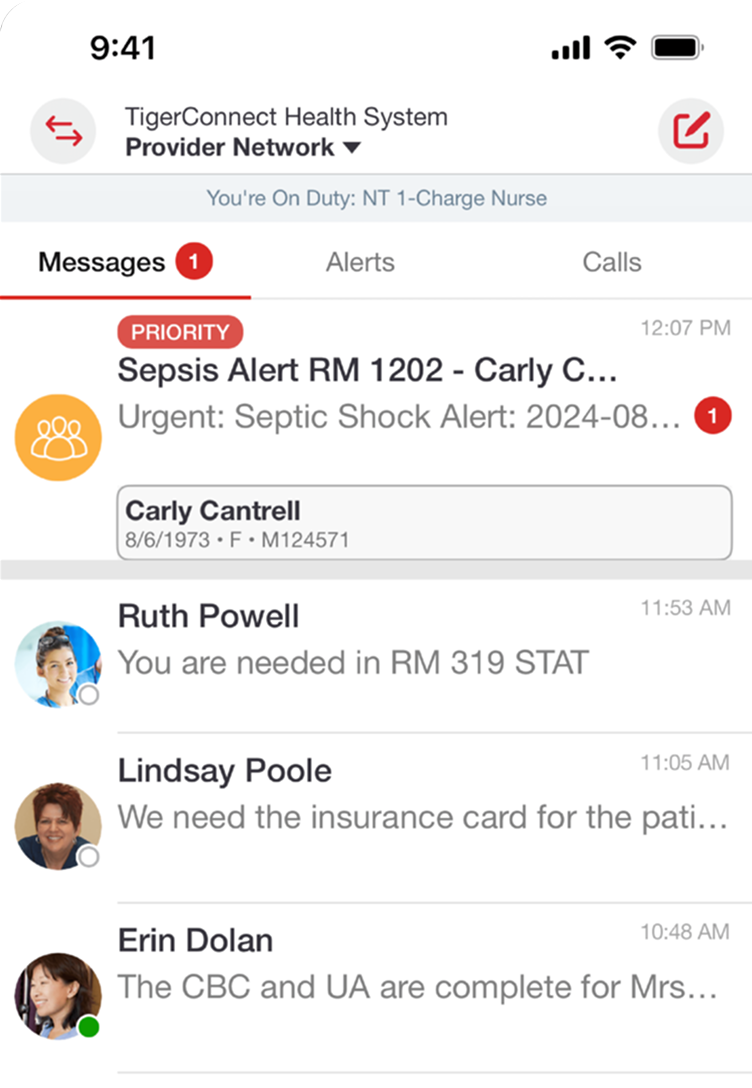
“The Peer Recovery Program is integrated with our EHRs, Cerner and Allscripts. If I ever need data and the report I have in the EHR is missing information, I can go right into TigerConnect and pull what I need.”
— Elliott Liebling, Development, RWJBarnabas Health Institute for Prevention and Recovery
The Results
In order to intervene sooner, RWJBH created automatic triggers using TigerConnect and their EHRs. These triggers instantly provide readmission alerts, patient information, and the appropriate workflows to result in faster, improved interventions.
“Those new triggers increased the number of referrals we received by close to a third,” states Liebling. “When the program started in 2016, we saw under 1,000 referrals per year, and now we see that number twice per month.”