
Case Study
Baylor St. Luke’s Medical Center Transforms Care Delivery with Life-Saving Outcomes
Discover how BSLMC cut stroke treatment times in half through real-time communication and stroke alerts with TigerConnect.
Results at a glance
door-to-needle time
stroke lives saved*
readmissions cost savings
Overview
Located in Houston, Texas, Baylor St. Luke’s Medical Center (BSLMC) is a 700-bed hospital, internationally recognized as a leader in research and clinical excellence. They are the first hospital in Texas and the Southwest to be designated as a Magnet hospital in nursing excellence, awarded for four consecutive years.
BSLMC’s average length of time to intervene through tPA was 62 minutes, which is slightly behind the American Heart Association’s guideline recommendation. In order to reduce treatment times and deliver faster care, BSLMC began a new strategic initiative to improve the quality of care and outcomes for stroke patients.
“Every minute a stroke patient goes without blood flow to the brain, patients lose two million neurons. This has a significant impact on the brain and directly affects their ability to recover and rehabilitate.”
— Dr. Chethan Rao, Section Head of Vascular Neurology and Neurocritical Care, Baylor St. Luke’s Medical Center (BSLMC)
The Solution
BSLMC needed a solution that would provide cohesive collaboration between all team players within the system. They recognized that improving communication and clinical workflows would help them rapidly assess stroke patients and deliver life-saving treatments.
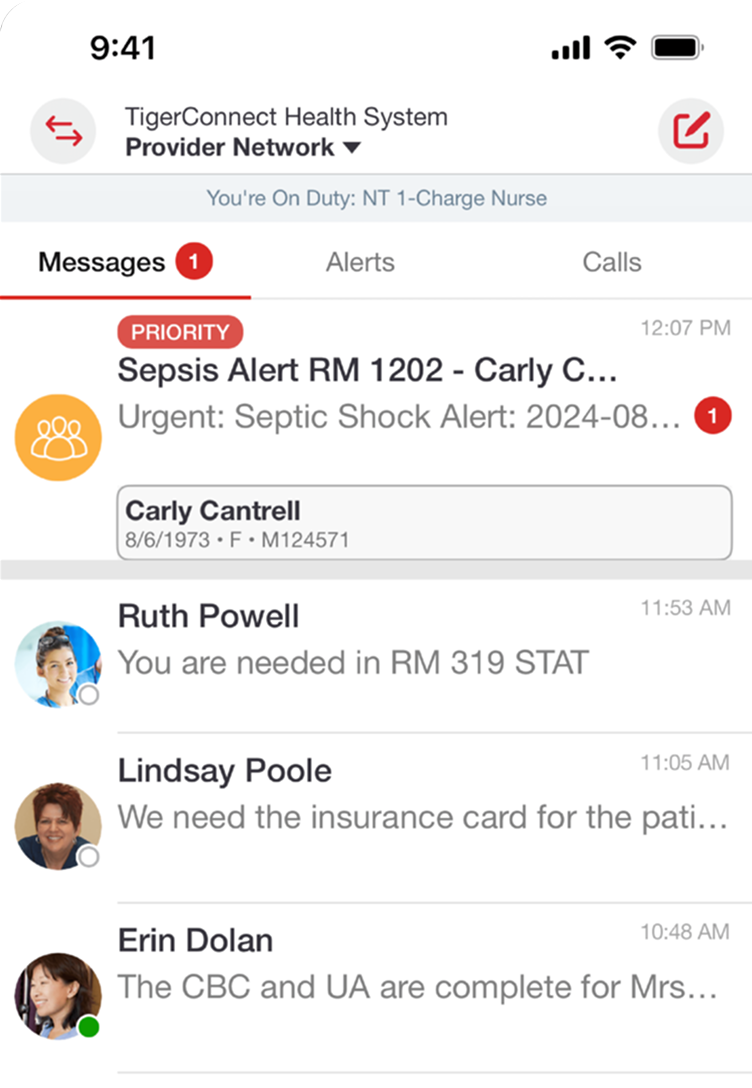
BSLMC adopted TigerConnect Clinical Collaboration as their main communication platform and integrated it with Decisio, a clinical decision support tool, to enable real-time stroke alerts, reduce treatment time, and improve provider communication.
The Results
BSLMC’s initiatives for process improvement began in 2019. Despite experiencing challenges, including the COVID-19 pandemic, BSLMC continued process improvements and achieved excellent results:
- 50% reduction in door-to-needle time
- Estimated 75 yearly stroke lives saved*
- $600K+ estimated reduced readmission cost savings*
- Advanced communication between stroke team
- Improved chances of recovery and rehabilitation
* Man, S., Xian, Y., Holmes, D., Matsouaka, R., Saver, j., Smith, R., Bhatt, D., Schwamm, L. & Fonarow, G. (2020) Association Between Thrombolytic Door-to-Needle Time and 1-Year Mortality and readmission in patients with acute ischemic stroke. JAMA; 323(21); 2170-2184
“We wanted not only a communication tool, but an artificial intelligence tool to constantly remind us. We wanted a reminder to go out for every single key player of stroke service to alert their role on a timely basis. The right people need to be alerted at the right time.”
— Dr. Chethan Rao, Section Head of Vascular Neurology and Neurocritical Care, Baylor St. Luke’s Medical Center (BSLMC)