Case Study

How UToledo Health Centralized On-Call Scheduling with TigerConnect
Results at a glance
- 60–75% reduction in time spent building and managing schedules
- On-call schedules available months in advance, up from last-minute monthly releases
- Real-time schedule visibility extended across care teams, operators, and clinical staff
The Initiative: Replacing Manual Scheduling with a Purpose-Built Solution
UToledo Health is a university-affiliated clinical enterprise where scheduling complexity is a given. With residents, fellows, and medical students rotating through care teams, departments operate under distinct on-call rules, and the volume and pace of care demand that the right provider be reachable at the right moment. UToledo Health saw an opportunity to modernize the infrastructure supporting complex workflows and make scheduling information easier to manage, access, and share.
“The provider’s schedule is their life,” said Laura Kern, Senior Administrative Director for Patient Access at UToledo Health. “When that’s not in alignment, it puts your own day-to-day into turmoil. For the nurse or lab tech who needs to report a critical value, feeling confident they’re going to reach the right person, that’s really at the foundation of what patient safety is all about.”
For providers, an inaccurate schedule means calls coming in on days off, disrupting personal lives and accelerating burnout. For clinical staff reporting critical values, it means unnecessary delays at moments when speed matters most.
“When a nurse is trying to reach a cardiologist on call, not only do they not have the most up-to-date schedule, they’re funneling back through the operator’s office to sift through last-minute updates,” said Laura Kern, Senior Administrative Director for Patient Access at UToledo Health. “It was heavily manual and very vulnerable to innocent human error. Not getting hold of the right person in a timely manner, that’s mission critical for us.”
The Strategy: One Platform, Built Around the People Who Use It
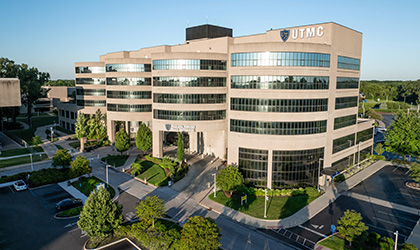
UToledo Health implemented TigerConnect Scheduling to replace its fragmented, manual process with a single, centralized source of scheduling truth across departments, specialty groups, and residency programs.
The implementation team worked closely with schedulers from the start, a process that quickly surfaced an important insight: schedulers hold institutional knowledge that even their own department administrators don’t always have access to. Looping them into the build process early proved essential, allowing their expertise to shape the custom rules, patterns, and preferences that now drive how schedules are built and maintained.
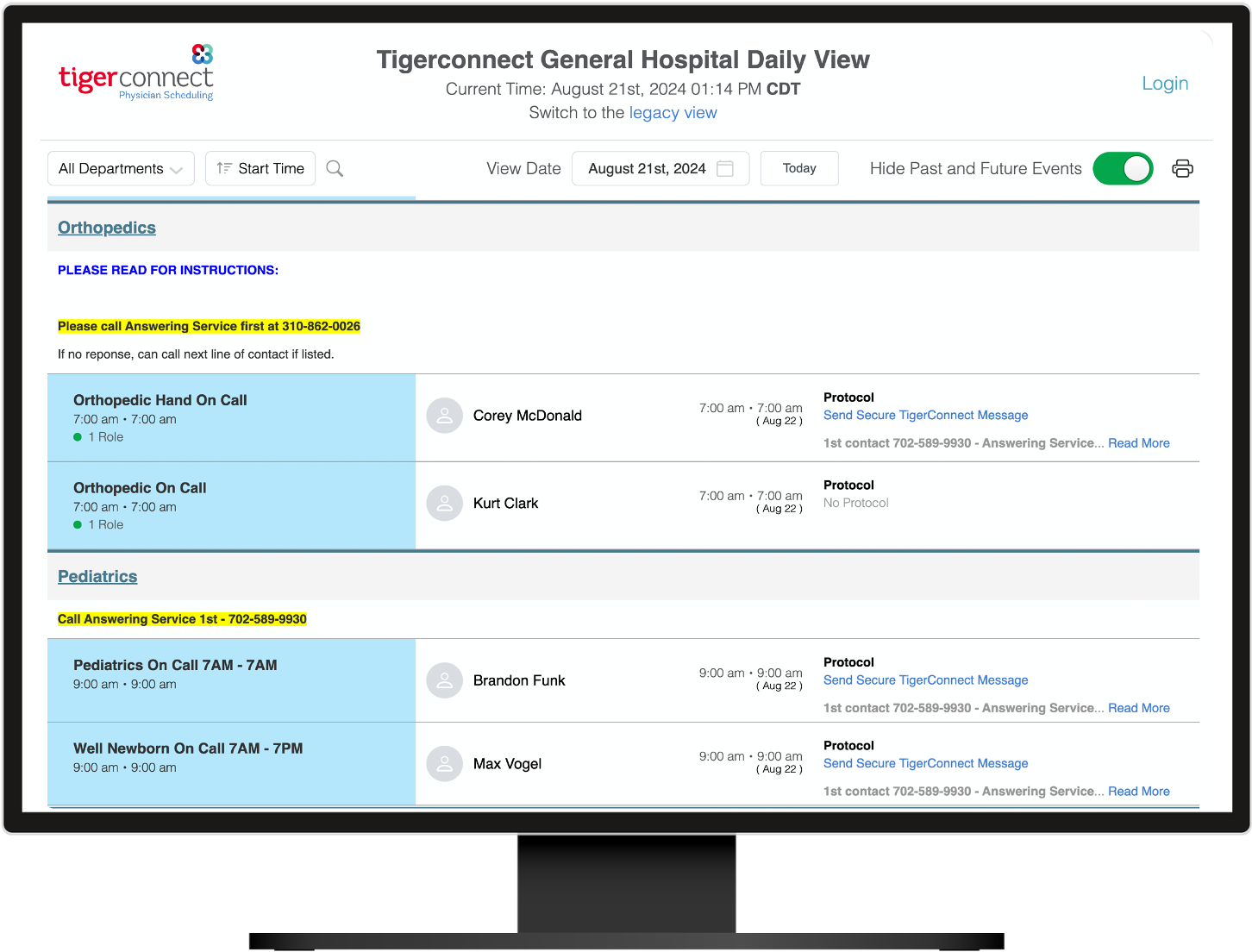
Unlike traditional scheduling tools that require IT support tickets to update rules or preferences, TigerConnect puts that control directly in the hands of schedulers so changes can be made in real time. The AI-powered scheduling engine builds complete schedules in minutes, automatically accounting for time-off requests, fair distribution across weekends and holidays, and department-specific preferences. Recurring assignments are set up once and maintained automatically, and real-time updates integrate directly into the tools care teams already use, so finding the right on-call provider no longer requires an additional call or a manual lookup.
The training and implementation teams ensured schedulers at every level were supported through the transition, including those encountering the system for the first time on go-live day.
The Impact: Transparency That Changed How Teams Work Together
Since going live, the results have been felt across the organization, from individual schedulers to nursing leadership to the operators at the center of it all.
Time Returned to the People Who Need It Most
Time spent building and managing schedules has been reduced by an estimated 60 to 75 percent.
With that capacity returned, schedulers are now building schedules months in advance rather than rushing to publish at the last minute, a shift with real quality-of-life benefits for providers who can now plan personal commitments with confidence.
And with the TigerConnect Scheduling rules engine handling recurring logic automatically, schedulers described the transition simply.
“If it’s August 20th and you already have your September and October schedules, you can make dinner reservations. You can plan,” said Laura Kern, Senior Administrative Director for Patient Access at UToledo Health. “That’s been a big quality of life improvement for providers.”
Visibility That Unlocked Collaboration
Perhaps the most meaningful impact was what real-time schedule transparency made possible beyond the scheduler’s desk. With accurate on-call information now visible across the care team, clinical leaders began using it in ways the system was never explicitly designed for. In one example, a nursing executive used the new visibility to connect directly with a department scheduler and address a longstanding operational friction that had previously gone unresolved.
“This transparency allowed us to start picking away at operational things that have probably been plaguing us for a while, connecting the right stakeholders and making adjustments based on real firsthand experience,” said Laura Kern, Senior Administrative Director for Patient Access at UToledo Health. “I’ve seen several examples of that, and it was just so collaborative.”
Confidence at the Point of Care
With real-time schedules now visible and accurate across the organization, clinical staff no longer have to wonder whether the person they are reaching out to is actually on call. For nurses, lab technicians, and anyone whose work depends on reaching the right provider at the right moment, eliminating that uncertainty helps support timely communication and patient safety.
“Not only does staff now have confidence in the schedule they’re seeing, they believe it. And when they do reach out, they know who they’re going to get.”
What’s Next
As adoption deepens across departments, the focus turns to expanding the number of schedulers and medical groups inputting directly into the system, making the single source of truth even more complete. For a learning hospital where new rotations, new providers, and new complexity arrive constantly, having a scheduling platform that can keep pace isn’t just an operational upgrade. It helps ensure providers and staff have access to accurate, real-time information to support safe, coordinated care.